How To Find Your Property On FEMA’s Flood Insurance Rate Maps

What are FEMA flood maps?
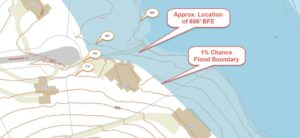
FEMA’s Flood Insurance Rate Maps (FIRMs) or just Flood Maps are provided after a flood risk assessment has been completed or updated for a community.  This study is known as a Flood Insurance Study.  The FIRM gives you the Base Flood Elevations (BFEs) and insurance risk zones in addition to floodplain boundaries.  The FIRM may also show a delineation of the regulatory floodway.

Once the “insurance risk zone”  (commonly referred to as the flood zone) is determined, actuarial rates, based on these risk zones, are then applied for newly constructed, substantially approved, and substantially damaged buildings.  FEMA uses these rates to determine the insurance rate you will pay for flood insurance

FEMA’s Digital Flood Maps

FEMA discontinued the production and distribution of paper flood maps in 2009 as part of its Digital Vision Initiative. This affected all the Flood Maps, boundary information, and study reports. However, clients can still view the products for free through their website or buy them in digital format.

To view these flood maps online, go to FEMA’s Map Service Center and key in your address (hi-lited area shown here) search for your home.  This will prompt you to then select the map that covers your area.  The Flood Maps are somewhat cumbersome to use online. It is best to go through the tutorial on the bottom right of the address search page for an easier and more effective use of the GIS map.

author avatar
Surveyor

More Posts

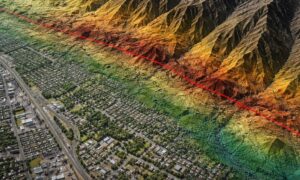
LiDAR mapping showing elevation data and fault-related terrain features near planned development areas
land surveying
Surveyor

Why New Fault Data Is Changing How LiDAR Mapping Is Used

Land development in Provo has always required careful planning. However, recent updates to Utah’s fault data are changing how developers evaluate land risk. What once looked like stable ground may now raise new questions. Because of this shift, more developers are turning to lidar mapping Utah projects early, not later,

Read More »
Surveyor reviewing documents and site notes before conducting a title survey
alta survey
Surveyor

How to Prepare for a Title Survey and Avoid Costly Delays

Ordering a title survey may sound easy. You contact a surveyor, they visit the site, and you receive a map. Still, the accuracy of that map depends on what happens long before the surveyor arrives. When documents are missing, access is blocked, or boundaries are misunderstood, the process slows down.

Read More »
Updated flood map review showing a residential home and an elevation certificate used to confirm property risk
flood damage
Surveyor

Why Flood Map Updates Trigger Elevation Certificate Requests

If you were recently told you need an elevation certificate, you’re probably confused. Nothing flooded. No storm rolled through your neighborhood. Your home looks exactly the same as it did last year. Yet suddenly, a lender, insurer, or city office is asking for paperwork you’ve never needed before. This is

Read More »
A licensed surveyor using a total station to confirm boundaries and site conditions during an ALTA Land Title Survey before property closing
alta survey
Surveyor

Recorded Isn’t Always Correct: ALTA Land Title Survey

When people buy property, they often feel safe once everything looks “official.” The deed is recorded. The title commitment looks clean. The maps match the address. At that point, many buyers assume the hard work is done. However, recorded documents do not always tell the full story. That is exactly

Read More »
Construction team reviewing plans during a construction survey check
land surveying
Surveyor

Why Projects Pause Until Construction Survey Is Verified

Construction projects across Northern Utah are moving fast—until they suddenly stop. In recent weeks, many developers and property owners have seen their projects pause even after everything looked ready. In many cases, the reason comes down to one request: the construction survey needs to be re-verified. That request often surprises

Read More »
Land surveyor using GPS equipment during topographic surveys in open terrain
land surveying
Surveyor

Topographic Surveys Change After an Archaeological Debate

Topographic surveys help people understand the shape of the land. For many years, they have supported planning, design, and land decisions. Recently, however, a new online debate brought topographic surveys into focus for a different reason. A discussion about archaeological mapping and survey technology spread quickly among professionals. Because of

Read More »