Many people use aerial imagery when they want to learn more about a piece of land. In fact, it often becomes a starting point for aerial imagery for property research, especially when buyers, builders, or property owners want a quick view of the area. At first glance, these images look clear, detailed, and current. You can see buildings, roads, trees, and even small features across a property, so it is easy to trust what the image shows.
However, there is one detail that many people overlook.
The image might not be new.
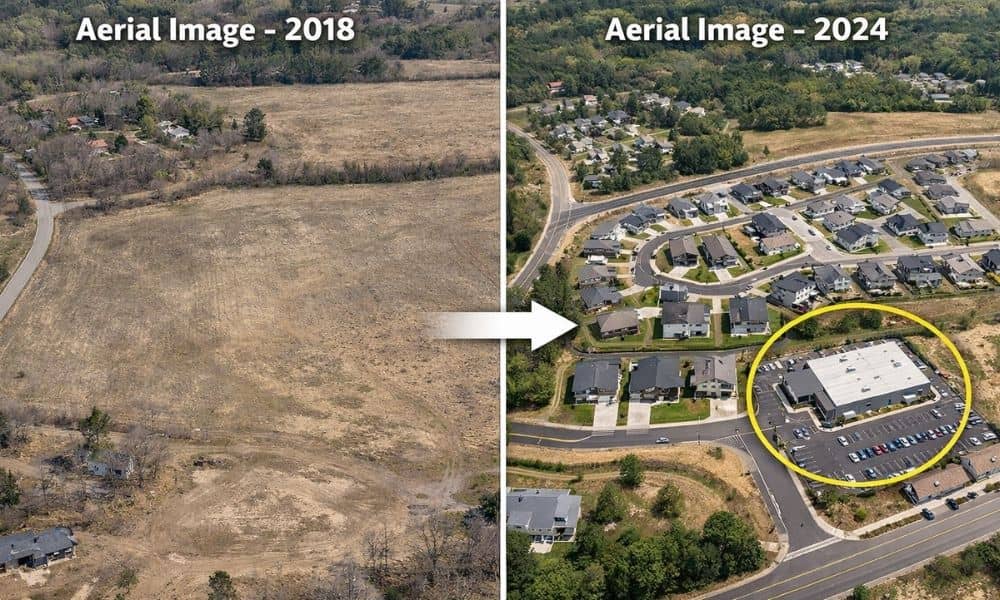
In fact, some aerial imagery comes from flights taken several years ago. While the image still looks sharp, the land below may have changed. New houses may exist. Trees may be gone. Roads may have expanded. As a result, people sometimes make decisions using images that no longer show the true conditions of a property.
For that reason, checking the capture date of aerial imagery matters before you rely on it for property or development decisions.
Why the Capture Date of Aerial Imagery Matters
Aerial imagery shows a property from above. Because of this view, people use it to study land before they buy it, build on it, or improve it. Yet the image only shows the land as it looked when the plane or drone took the photo.
If that flight happened years ago, the image may no longer reflect the real situation.
For example, imagine someone plans to build on a vacant lot. They open aerial imagery and see open ground with no nearby development. Everything looks simple. However, the image might be five years old. Since then, several houses may have been built nearby.
As a result, the original image no longer tells the full story.
Similarly, a buyer may review aerial imagery before purchasing land. The photo may show trees, open space, and easy access. However, recent construction might have changed the surrounding area. New roads, fences, or drainage features may exist today.
Because of these changes, the capture date helps people understand how reliable the image really is.
Where People Use Aerial Imagery for Property Decisions
Today, many people depend on aerial imagery when they study land or property. In fact, it often becomes the first step in research.
For example, homebuyers often start by looking at aerial imagery of a property so they can understand nearby homes, roads, and land features. This simple view from above helps them picture the neighborhood before they visit the site in person.
Developers also rely on aerial imagery when they review land for future projects. The overhead view helps them understand lot shape, nearby development, and possible site access.
Property owners often check aerial imagery as well. They may want to plan a fence, driveway, or new structure. The image helps them picture how the property looks from above.
In addition, planners and engineers sometimes review aerial imagery during early project discussions. It helps them spot slopes, tree areas, and drainage patterns.
Even though aerial imagery helps with these tasks, the capture date still determines how useful the image will be.
How to Check the Capture Date of Aerial Imagery
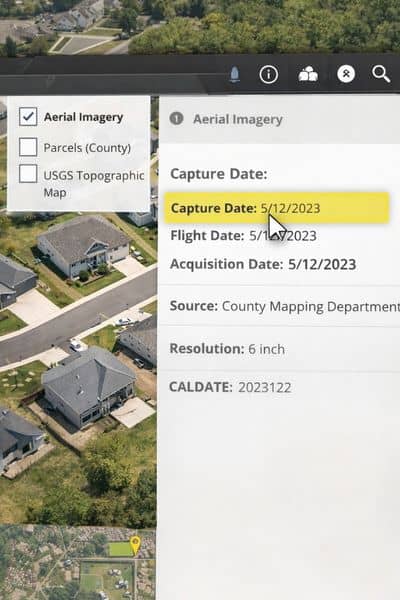
Fortunately, checking the capture date usually takes only a few minutes. Once you know where to look, you can quickly confirm how old the image is.
First, look for image information or metadata. Many aerial imagery datasets include details about when the image was taken. This information may appear as the capture date, flight date, or acquisition date. Some mapping systems also show a field called “CALDATE.”
Next, review the source of the imagery. Different mapping platforms update their aerial imagery on different schedules. Some counties update imagery every few years. Meanwhile, other systems update less often. Because of that, knowing the source helps you understand how current the image might be.
After that, compare multiple imagery years if the platform allows it. Many mapping systems include historical layers. By switching between different years, you can see how the land changed over time. This comparison often reveals new construction, removed trees, or new roads.
Finally, confirm the date before you rely on the image. A simple check prevents confusion later.
Signs the Aerial Imagery Might Be Outdated
Even without metadata, some clues suggest the aerial imagery may not be current.
For example, you might notice buildings missing from the image. Yet those structures appear in recent photos or street views. That difference often means the aerial imagery came from an earlier year.
Construction sites provide another clue. If the image shows a large empty area, yet local development has already finished, the image likely came from before construction started.
Road changes also reveal outdated imagery. New lanes, roundabouts, or extensions may not appear in older images. Because roads change often, they quickly expose older imagery.
Vegetation can also help identify image age. Trees grow, disappear, or move during development. If tree patterns look very different today, the aerial imagery may be several years old.
When these clues appear, checking the capture date becomes even more important.
Why Professionals Verify Aerial Imagery First
Surveyors, engineers, and planners often review aerial imagery during early project work. However, they rarely rely on it without checking the date first.
Professionals understand that land changes quickly. New grading, construction, and infrastructure appear every year. Therefore, they confirm the capture date before they analyze the image.
They also compare aerial imagery with other information. Survey data, site visits, and engineering plans provide more accurate details. Together, these sources give a clearer picture of the property.
Because of this process, professionals treat aerial imagery as a helpful reference rather than a final answer.
When Aerial Imagery Should Not Be the Only Source
Aerial imagery offers valuable insight, yet it cannot replace professional land information.
For example, aerial imagery cannot define property boundaries. Only a land survey can legally identify those lines.
Similarly, aerial imagery cannot provide exact elevation data for construction design. Engineers need field measurements and survey information for that work.
Infrastructure planning also requires more detailed data. Utilities, drainage systems, and underground features rarely appear in aerial imagery.
Because of these limits, aerial imagery works best as an early visual reference. It helps people understand the land before deeper analysis begins.
Final Thoughts
Aerial imagery makes it easy to view land from above. It helps buyers, builders, and property owners understand the layout of a property quickly. However, the image only shows the land as it appeared when the photo was taken.
For that reason, checking the capture date of aerial imagery remains an important step. By confirming the date, users avoid mistakes and gain a clearer understanding of current site conditions.
Before you rely on aerial imagery for property or development decisions, take a moment to verify when the image was captured. That small step helps ensure the information you see truly reflects the land today.