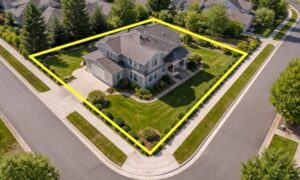

After construction ends in Ogden, one document can determine whether your project gets approved, funded, or legally closed: the as-built survey. Most people have never heard of it. But if you are building, buying, or financing a property, it matters more than you might expect.
What Is an As-Built Survey?
An as-built survey is a document created after construction is complete. It records the exact location, size, and elevation of everything that was built. This includes buildings, utilities, driveways, and drainage. It shows what was actually constructed, not just what was planned.
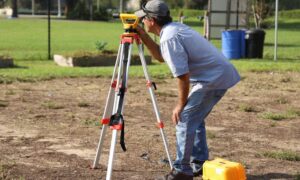
A licensed land surveyor visits the site and measures everything on the ground. This includes the building footprint, floor elevations, and utility line locations. The final result is a certified, legally binding document.
Here is a simple way to think about it. A construction survey tells builders where to place things. An as-built survey records where things ended up. Those two are not always the same.
What Does an As-Built Survey Include?
A standard as-built survey documents:
- The exact position of the building on the lot
- Finished floor elevations at entry points and low spots
- Water, sewer, gas, and electrical utility locations
- Driveways, sidewalks, curb cuts, and retaining walls
- Setback distances from property lines and streets
- Any structures that cross into a neighboring property
Why Banks Require an As-Built Survey
Banks require an as-built survey before releasing the final portion of a construction loan. They need certified proof that the building was built as planned, that setbacks were met, and that the property is a sound investment before they release remaining funds.
Construction loans are paid out in stages. The bank releases money as work gets done. Before releasing the last payment, the lender needs confirmation that everything was built correctly.
The American Institute of Architects reports that 35 to 40 percent of construction projects have at least one change from the original plans during the build. Banks know this. That is why they need an independent, certified record before the loan closes.
Title companies also rely on this document. When they issue lender title insurance on new construction, they need to confirm there are no encroachments or setback violations. The as-built survey gives them that proof.
Why Cities and Local Governments Require It
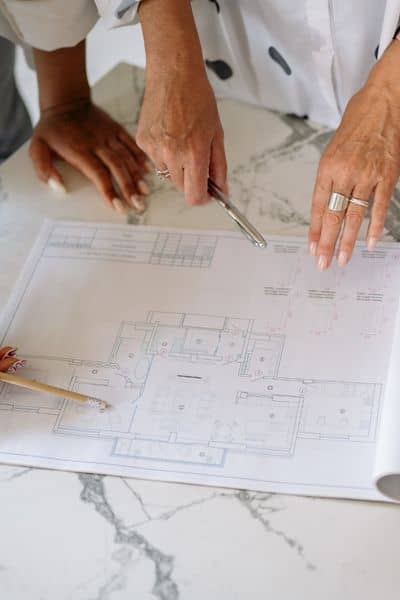
Cities require an as-built survey before issuing a Certificate of Occupancy. It proves that the building follows approved setbacks, matches the permitted grading plan, and was built to code. Without it, the city has no reliable way to confirm the project was completed correctly.
In Ogden, the building department requires as-built documentation for commercial projects and some residential builds before a Certificate of Occupancy is issued. Here is what cities verify:
Setback Compliance
Every property has rules about how close a building can be to a property line, street, or easement. An as-built survey is the only certified proof that those rules were followed once construction was done.
Utility Record-Keeping
Ogden City Public Works keeps permanent records of underground utility locations. After construction, the as-built utility data gets added to the city infrastructure database. This helps with future repairs, emergency response, and new permit approvals.
Flood Zone Elevations
Weber County requires finished floor elevation data for properties near flood zones. FEMA data shows that even a one-inch difference in a building’s finished floor elevation can raise annual flood insurance costs by hundreds of dollars. An as-built survey captures this information with precision.
Subdivision Plat Recording
In new subdivisions, an as-built survey must be submitted before the final plat can be recorded with Weber County. This confirms that streets, lots, and utilities were built exactly where the approved plat shows.
When Do You Need an As-Built Survey?
You most likely need one if you are:
- Closing out a commercial construction loan
- Applying for a Certificate of Occupancy on a new commercial building
- Recording a final subdivision plat with Weber County
- Getting ALTA title insurance on newly constructed property
- Refinancing a property that was recently developed or improved
- Resolving a dispute with a contractor about what was actually built
How Long Does It Take?
For a standard commercial project, an as-built survey typically takes 3 to 7 business days from fieldwork to delivery. Larger projects and subdivisions may take 2 to 4 weeks. Factors that affect timing include site size, the number of utility systems involved, and how busy the surveying firm is.
How Much Does It Cost?
Costs in the Ogden and Weber County area vary by project size:
| Project Type | Estimated Cost |
| Residential addition | $800 to $1,500 |
| Small commercial building | $1,500 to $3,500 |
| Large commercial project | $3,500 to $8,000 or more |
| Multi-building subdivision | $8,000 to $25,000 or more |
RSMeans construction cost data shows that as-built surveying typically accounts for less than 0.5 percent of total project costs. But disputes caused by missing as-built records average $50,000 to $200,000 per case to resolve. The survey is a small cost that prevents a very large problem.
Frequently Asked Questions
Is an as-built survey the same as a building inspection?
No. A building inspection is a visual code check done by a city inspector. An as-built survey is a precision measurement produced by a licensed surveyor. Both are typically required, and they serve different purposes.
Who pays for an as-built survey?
The property owner or developer pays for it. In construction loan deals, it is usually included as a project closing cost.
Do homes in Ogden need one?
Single-family homes usually need an as-built survey when a construction loan is involved or when the property sits in a flood zone. Check with Ogden City’s building department for the current requirements.
Can an as-built survey reveal problems after construction?
Yes, and this is one of its most valuable uses. Encroachments, setback violations, and elevation errors are commonly discovered at this stage. Finding them right after construction costs far less than discovering them during a future sale or refinance.