Buying a new-construction home feels safe. Everything is new. The layout looks clean. The builder says it’s ready.
That does not mean the lot is correct.
A home can sit a few feet off. A driveway can cross a line. A fence can land on the wrong side. Most buyers do not notice this until it costs them money.
In South Jordan, new homes go up fast. That speed increases the chance of small layout mistakes. A land survey helps you catch them early.
Do You Need a Land Survey Before Buying a New-Construction Home?
Yes. A land survey confirms property boundaries, shows where the home sits on the lot, and reveals encroachments. Even new homes can have layout errors. Without a survey, buyers risk disputes, delays, and costly fixes after closing.
Why New Homes Are Not Always Placed Correctly
Builders move fast. Crews switch in and out. Plans change during construction.
That creates room for error.
A house may shift slightly during layout. Grading work can adjust elevation. Drainage changes can affect where the structure ends up.
Even a small shift matters. Property lines do not move. The structure does.
Also, most buyers cannot see lot lines on the ground. No markers, no clear edges. It is easy to assume everything lines up.
That assumption causes problems later.
What Does a Land Survey Confirm Before Closing?
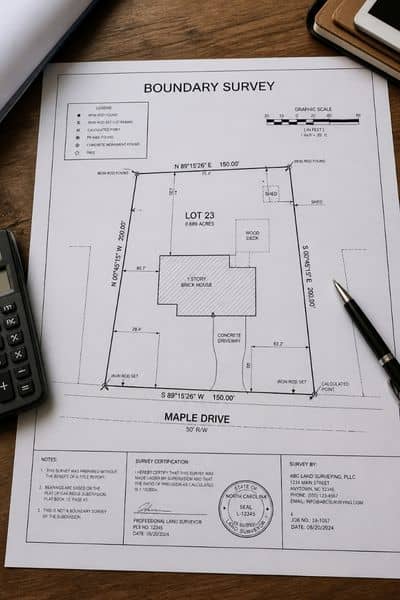
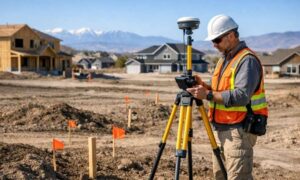
A land survey shows what you are actually buying, not what the plans suggest.
It confirms:
- Exact property boundaries
- Location of the home on the lot
- Driveways, walkways, and improvements
- Encroachments from nearby properties
- Easements that affect land use
Encroachments are common in residential areas. Surveyors deal with them often. If you skip this step, you take that risk yourself.
Why This Happens More Often in South Jordan
South Jordan keeps expanding. New neighborhoods fill in quickly. Homes sit closer together than before.
That creates tight margins.
A few feet off can affect a property line. A small mistake during layout can carry through the entire build.
Older lots next to new ones add another layer. Records may not match perfectly. Field conditions can differ from plans.
This is not rare in growing areas. It shows up more often than buyers expect.
What Can Go Wrong Without a Land Survey?
Plenty.
A fence can end up on the wrong side. A driveway can cross into a neighbor’s lot. A structure can sit too close to a setback line.
Those problems lead to:
- Neighbor disputes
- Delays during resale
- Issues with permits
- Expensive fixes
Survey-related issues can delay closings by several days or longer if found late. Fixing them after closing costs more than checking early.
When Should You Order a Land Survey?
Order it early. Not after closing.
Best timing:
- During due diligence
- Before final walkthrough
- Before signing closing documents
This gives you time to act. If something looks off, you can raise it before the deal closes.
What Type of Land Survey Do New Home Buyers Need?
Most buyers need a boundary or improvement survey.
This survey shows both the lot lines and the structure location.
Some lenders or title companies may ask for more detail. That depends on the property. In most cases, a standard survey gives you what you need.
Professional surveys follow standards set by groups like American Land Title Association and National Society of Professional Surveyors. These standards help keep results consistent and reliable.
How a Land Survey Protects Your Investment
You are not just buying a house. You are buying land.
A survey confirms the size, boundaries, and layout. It reduces the chance of disputes. It also helps when you sell later.
Most buyers skip this step because they trust the build.
That trust does not fix a boundary issue.
A survey does.
How to Avoid Problems After Closing
Do not assume everything is correct.
Check the documents. Ask questions. Order a survey before you commit.
Keep a copy of the survey for future use. You may need it when building a fence, adding improvements, or selling the property.
Small effort now prevents bigger problems later.
FAQ:
Do new homes come with a land survey?
Not always. Builders may provide plans, but those do not replace a full survey.
Can a new home have boundary issues?
Yes. Fast construction and field changes can lead to placement problems.
Who pays for the survey?
Usually the buyer, unless negotiated in the contract.
Is a survey required for financing?
Sometimes. It depends on the lender and the property.