If you’re building a home, there’s one step that quietly controls everything that comes next: house staking.
Before excavation starts. Before forms go in. Before concrete trucks show up.
House staking marks the exact location of your future home on the lot. It sets the corners, confirms setbacks, and locks in elevation. When it’s done right, your build flows smoothly. When it’s rushed or unclear, delays stack up fast.
Herriman continues to grow, and most lots here sit inside tight subdivisions. That means small mistakes don’t stay small. Even a two-inch shift can cause inspection problems, neighbor disputes, or a full re-stake.
Why House Staking Mistakes Cost So Much
First, concrete crews schedule weeks in advance. If layout changes at the last minute, you lose your slot. That alone can push your build back days or even weeks.
Second, excavation equipment already sits on site. If someone realizes a setback violation after digging begins, you pay twice.
Finally, Herriman lots often sit close together. One misplaced corner can break a side setback rule. Then the city steps in. Nobody wants that conversation after forms are set.
Because of that, proper house staking protects your timeline, your budget, and your peace of mind.
Start With the Right Plan Set
Before anyone sets a single stake, confirm you’re using the latest approved plans. Builders sometimes tweak garage widths or adjust window layouts. However, if those changes don’t reach the staking crew, problems follow.
Always check the revision date on the drawings. Then match those dimensions to the permit set. If something looks off, stop and fix it now. It’s much easier to solve a paper issue than move forms later.
Know Your Real Property Lines
Next, verify the recorded plat dimensions. Never assume a fence shows the true lot line. In newer Herriman neighborhoods, grading and landscaping often shift visual boundaries.
Because of that, house staking must reference official lot data. A few inches near a side yard can break a setback rule. That turns into a redesign instead of a simple correction.
Confirm Setbacks Before Marking Corners
Front, side, and rear setbacks all matter. Corner lots usually follow different rules than interior lots. In some areas, HOA guidelines also shape placement.
So before staking begins, confirm those distances in writing. That way, when the corners go in the ground, everyone knows they sit inside approved limits.
Protect Control Points Early
Control points act as your backup references. Think of them as insurance for your layout.
Excavation crews move fast. Stakes get bumped. String lines get pulled. However, if the staking team sets solid control away from heavy activity, you avoid a full re-stake later.
Smart builders protect those control points like gold.
Decide Between Direct Staking and Offsets
On wide, open lots, crews sometimes stake corners directly. However, many Herriman lots don’t allow that luxury.
Offset staking places reference marks several feet away from the actual corner. That way, excavation doesn’t destroy your reference points.
Although offsets require clear communication, they often prevent confusion once digging begins.
Lock in Elevation Before Layout
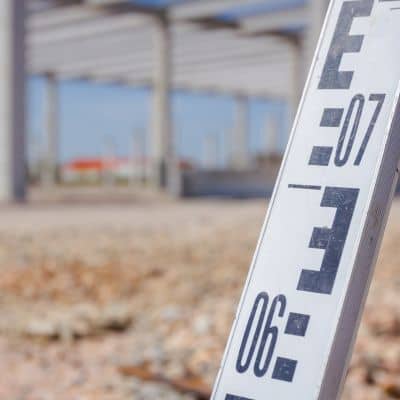
Finished floor elevation controls drainage, garage slope, and inspection approval. If you’ve ever looked at a lot and noticed even a slight slope, you already know how much that can affect water flow and driveway height. That’s why many builders review the contours shown in a recent topographic survey before choosing the final floor elevation.
From there, confirm the grading plan matches the architectural plan. Double-check the garage drop and entry height. If those numbers don’t line up, fix them before house staking starts.
Elevation errors rarely show until later. Yet when they surface, they cost real money.
Talk to the Excavation Crew First
Communication prevents most re-stakes.
Before staking day, confirm the digging plan. Ask where equipment will stage. Clarify which markers must stay untouched.
When crews understand the layout strategy, they protect the important references instead of removing them by mistake.
Check for Utility Conflicts
Sewer stubs, water lines, and storm drains don’t move easily.
If a foundation corner lands on top of a utility entry point, changes become expensive. So during house staking, confirm those locations early. Adjust now instead of mid-build.
Walk the Site With the Builder or Owner
Although drawings look clear on paper, sites feel different in person.
Walk the lot together. Face the street. Confirm driveway alignment and house orientation. Look at retaining walls or slopes nearby.
That short walkthrough often prevents “I didn’t realize it would sit like that” conversations later.
Document Everything
Photos protect everyone involved.
Capture each staked corner. Photograph offsets and control points. Save a simple layout sheet with dimensions.
If questions pop up later, documentation keeps disputes short and simple.
Create a Stop Rule
Sometimes something doesn’t add up.
Maybe a monument sits missing. Maybe a plan dimension conflicts with the plat. Instead of guessing, pause. Clarify before proceeding.
That one decision alone can prevent a full teardown of forms.
Perform a Final Pre-Pour Check
Before forms lock in place, verify diagonal measurements. Confirm distances between corners. Recheck elevation.
This quick review takes minutes. Yet it can save thousands.
Why Re-Stakes Happen in Herriman
Most re-stakes don’t happen because of bad surveying. Instead, they happen because of poor communication.
Plan revisions don’t reach the field. Excavation wipes out reference stakes. Setbacks get misunderstood. Tight subdivision spacing leaves no room for error.
However, when house staking follows a clear process, those issues shrink.
How Homeowners Can Help
Even if you’re not the builder, you still play a role.
Provide approved plans. Share changes immediately. Protect stakes once they’re in the ground. Ask questions before concrete arrives.
Because at the end of the day, house staking sets the footprint of your future home. Every wall, every roofline, every driveway follows those first marks.
Final Thoughts
House staking might seem like a small step in a long construction journey. Yet it controls everything that follows.
In a fast-growing city like Herriman, where lots sit close and timelines stay tight, precision matters more than ever. When you confirm plans, protect control, communicate clearly, and double-check before the pour, you avoid costly re-stakes.
And more importantly, you keep your build moving forward without unnecessary stress.If you’re getting close to excavation, it’s worth pausing for a moment to make sure everything is laid out correctly. Many delays happen simply because staking was rushed or scheduled too late. Taking the time to schedule a layout before concrete day can make the rest of your build feel a lot smoother. After all, the concrete will only be as accurate as the stakes that came before it.